
The Hidden Cost of Founder/owner Dependency
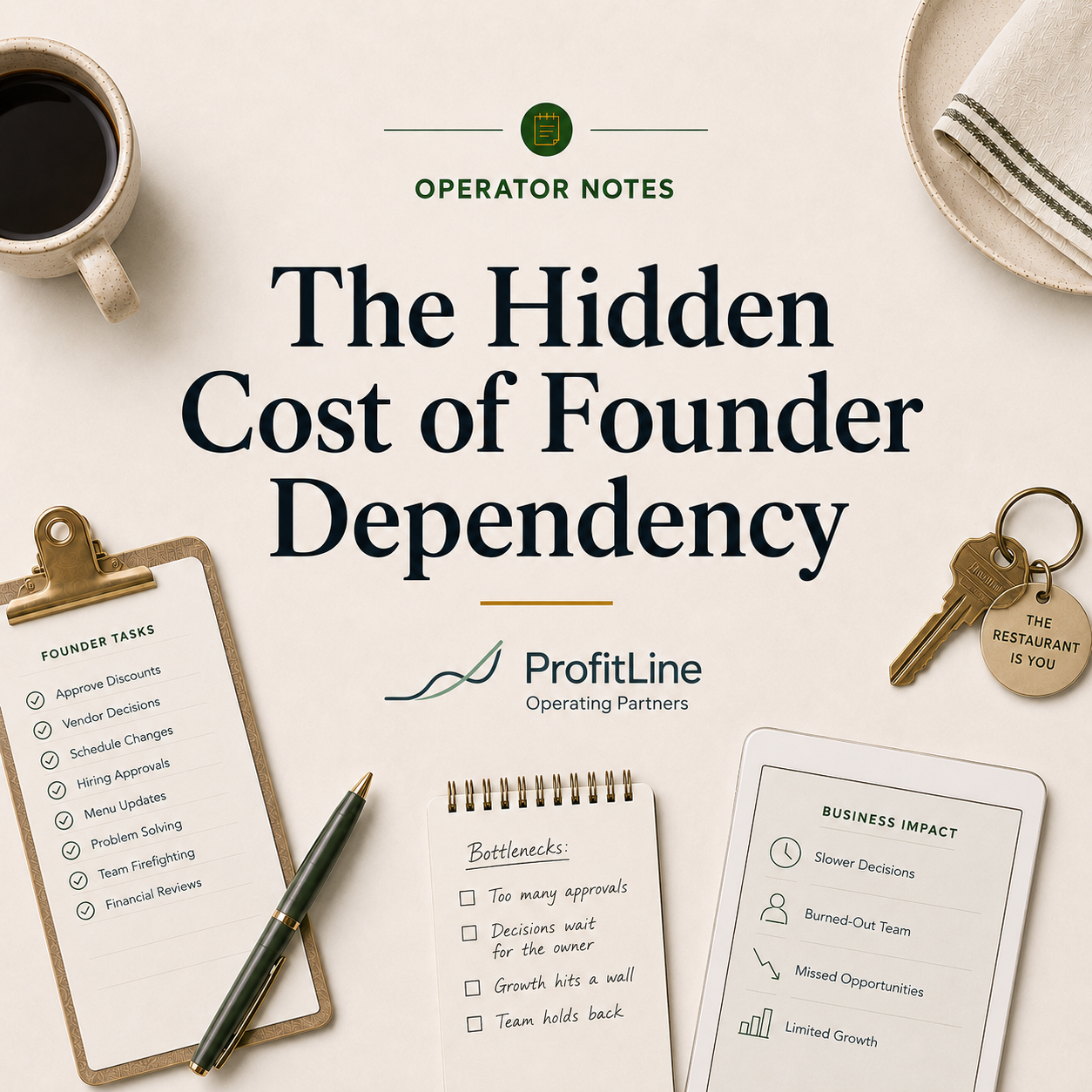
A lot of growing restaurant groups hit the same wall.
The founder/owner is still the answer to every question.
Who approves this? Ask the founder. How should we handle this employee issue? Ask the founder. What are the standards? Ask the founder.
That works for a while, especially when the founder is talented, hard-working, and willing to carry the weight. But eventually, the business starts moving only as fast as the founder can respond.
Managers stop making decisions, teams wait for direction, accountability gets blurry, important work piles up, the founder becomes the bottleneck, even when everyone respects them.
That is the hidden cost. Founder dependency usually does not show up as one major failure. It shows up in a thousand little slowdowns. A delayed decision, an unclear standard, a missed follow-up, a manager who needs permission for everything, a restaurant that cannot run the same way unless the founder is in the building.
The answer is not for the founder to care less. The answer is to build more structure around the business.
Clear roles, simple scorecards, weekly operating rhythms, documented standards & training, manager expectations, decision rights, and follow-up systems.
The goal is not to remove the founder’s influence. The goal is to turn that influence into a system the team can actually use.
How ProfitLine Helps
At ProfitLine Operating Partners, this is a big part of my work.
I help brands move from founder-dependent operations to cleaner, more consistent operating systems.
That can include building scorecards, clarifying roles, installing weekly leadership rhythms, tightening labor and prime cost controls, documenting standards, and helping managers understand what they are responsible for owning.
Because the next stage of growth usually requires a shift. From being the person who holds everything together…To building the operating system that helps the business hold itself together.
