
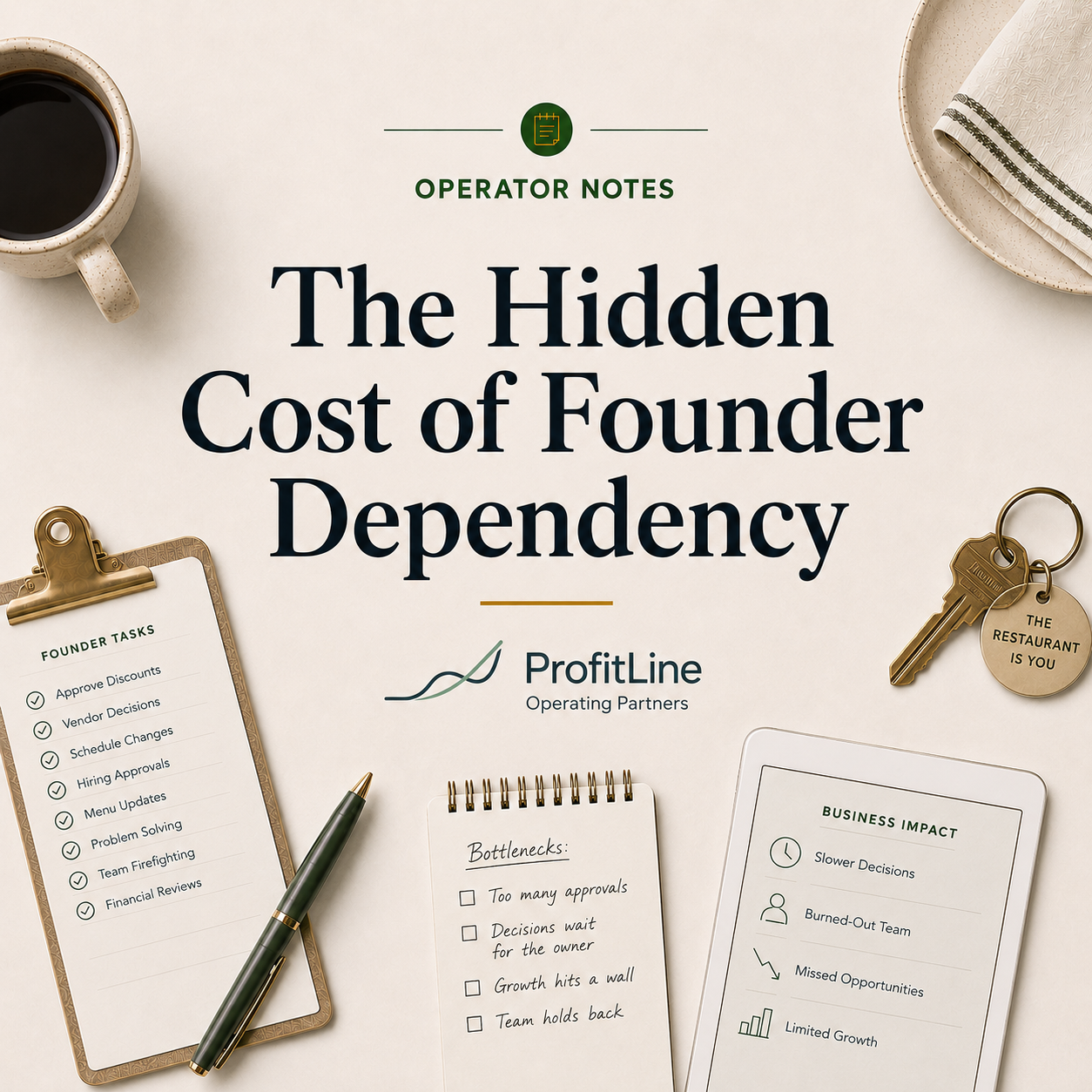
The Hidden Cost of Founder/owner Dependency
Founder involvement can build a strong restaurant, but founder dependency can slow the business down. When too many decisions, approvals, and fixes run through the owner, the team starts waiting instead of leading. Here’s why growing restaurant groups need stronger systems, clearer ownership, and less reliance on the founder to keep everything moving.
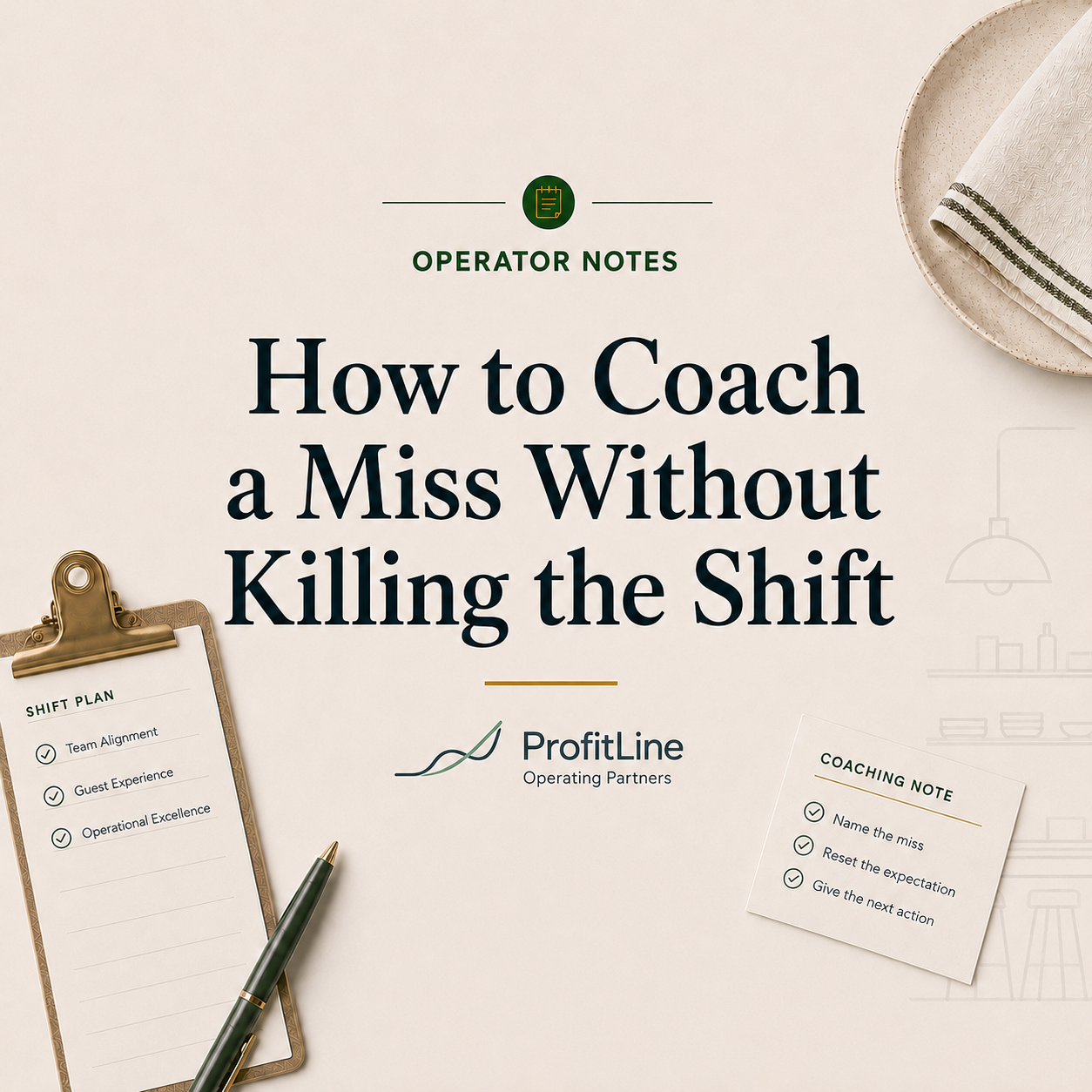
How to Coach a Miss Without Killing the Shift
Coaching during a restaurant shift does not have to turn into a big production. Managers need a simple way to correct the miss, reset the expectation, and keep the shift moving without embarrassing the employee or letting the standard drift.
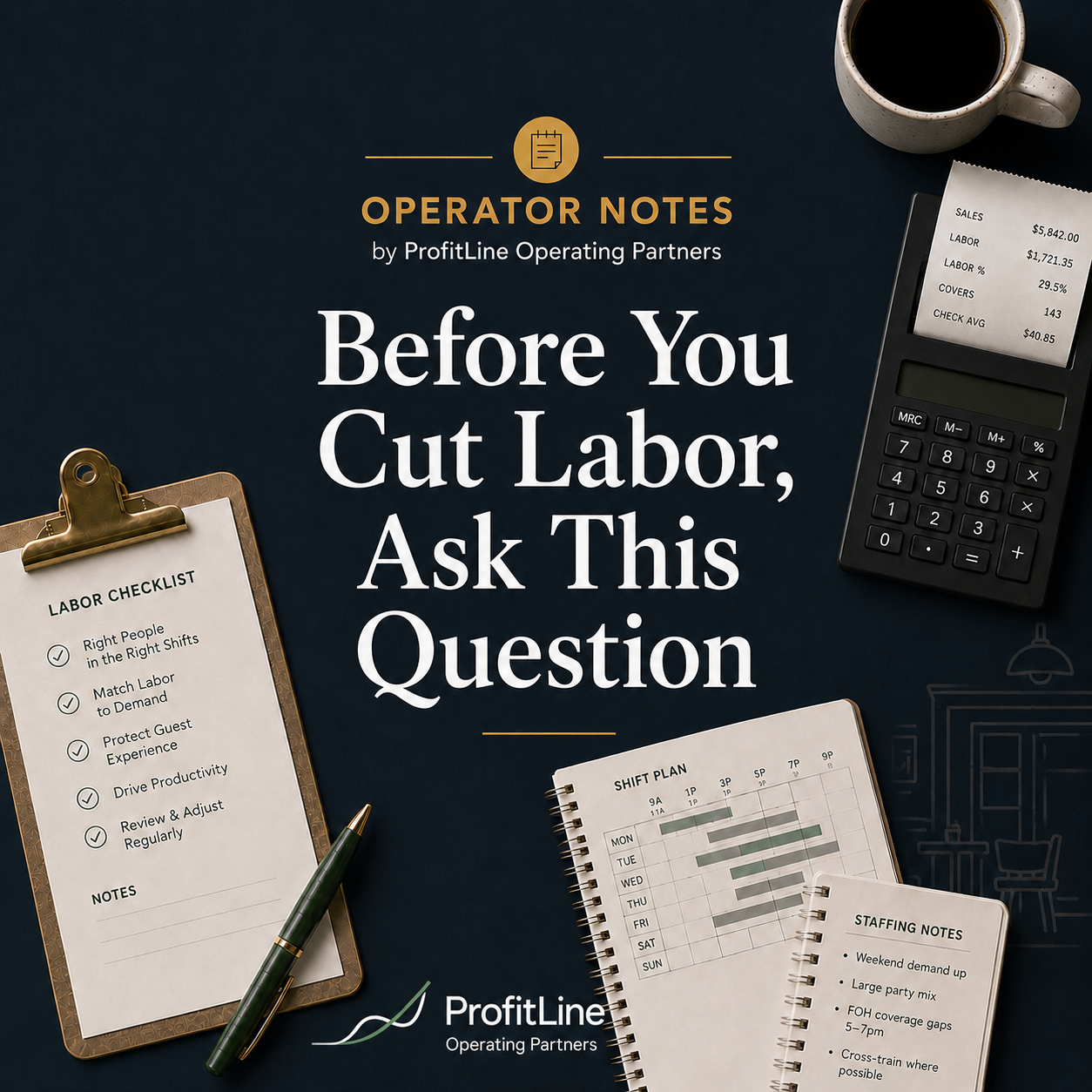
Before You Cut Labor, Ask This Question
Before you cut labor, make sure you know what work still needs to get done and who is going to do it. Smart labor control is not just about sending people home. It is about protecting the guest, the close, and the next shift while still managing the number.
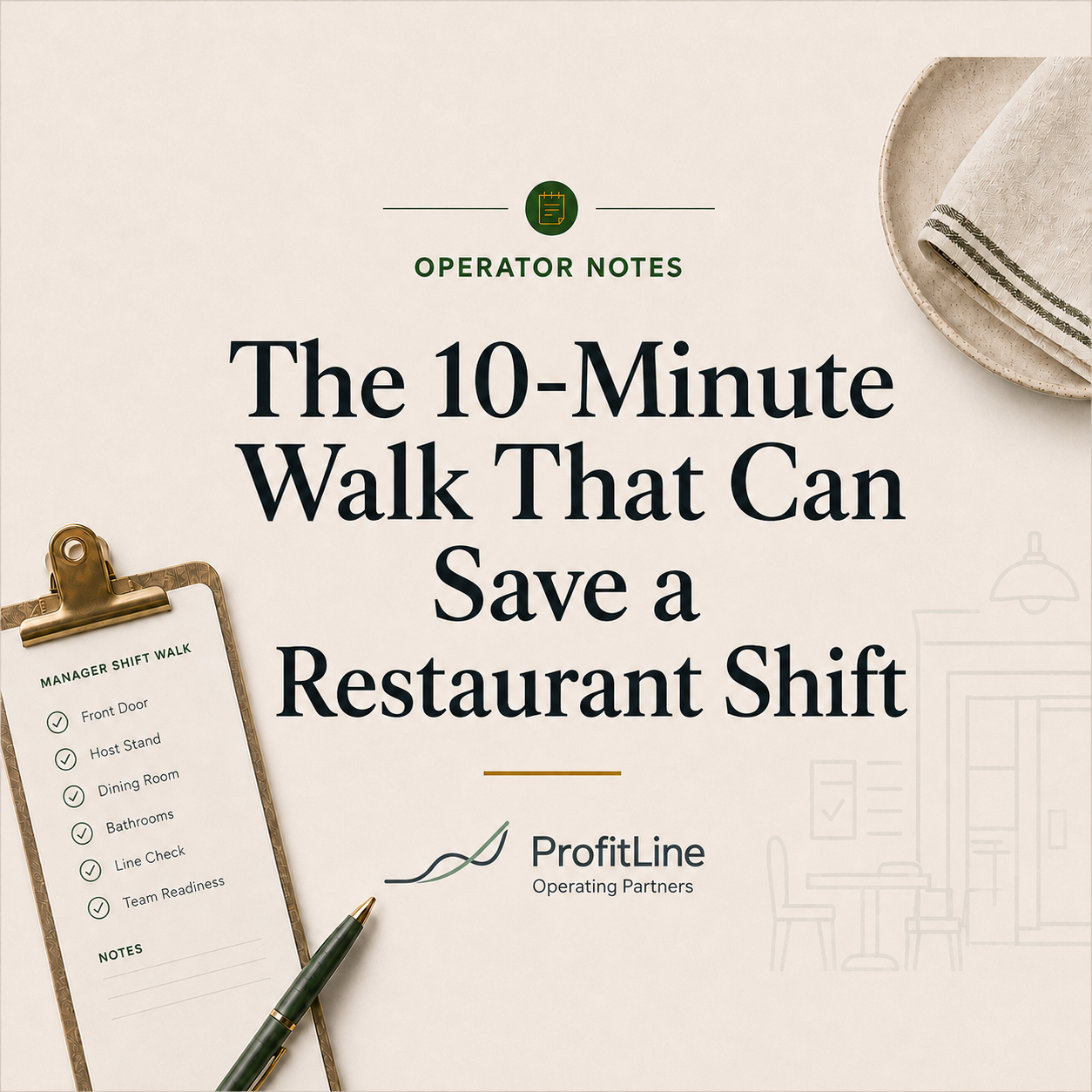
The 10-Minute Walk That Can Save a Restaurant Shift
A bad restaurant shift usually gives you a warning before it goes sideways. A simple 10-minute manager walk before the rush can help catch issues with guest first impressions, handoff points, line readiness, team energy, and shift focus before they turn into bigger problems.
Why Manager Meetings Don’t Fix Execution
Manager meetings do not usually fail because the wrong topics get discussed. They fail because the conversation does not turn into ownership, follow-up, and actual change in the restaurant. Here’s why execution improves after the meeting, not during it.
Why the Multi-Unit Leader Makes or Breaks Restaurant Growth
Multi-unit leaders are the link between what ownership wants and what actually happens in the restaurants. Here’s why the role matters, and why it needs structure.
Should You Hire a Restaurant Consultant?
Hiring a restaurant consultant can be useful if you are clear on the problem and ready to act. Here’s how to know when outside restaurant operations help makes sense.
When Your Restaurant Standards Become Suggestions
Most restaurants have standards. The real issue is when those standards change depending on who is managing the shift. Here’s why culture is built by what managers inspect, correct, ignore, and tolerate during the actual work.
Why Restaurant Training Fails When Operations Doesn’t Own It
Restaurant training only works when it shows up during the shift. If training lives in a binder, a shared drive, or with one “training person,” it usually breaks down in execution. Here’s why operations has to own the follow-up, coaching, and standards that turn training into consistency.
Why Your Best hourly Employee Might not Be Ready to Manage Yet
Your best hourly employee may have the work ethic and trust to become a manager, but that does not mean they are ready yet. Here’s how restaurant operators can promote from within without setting people up to fail.
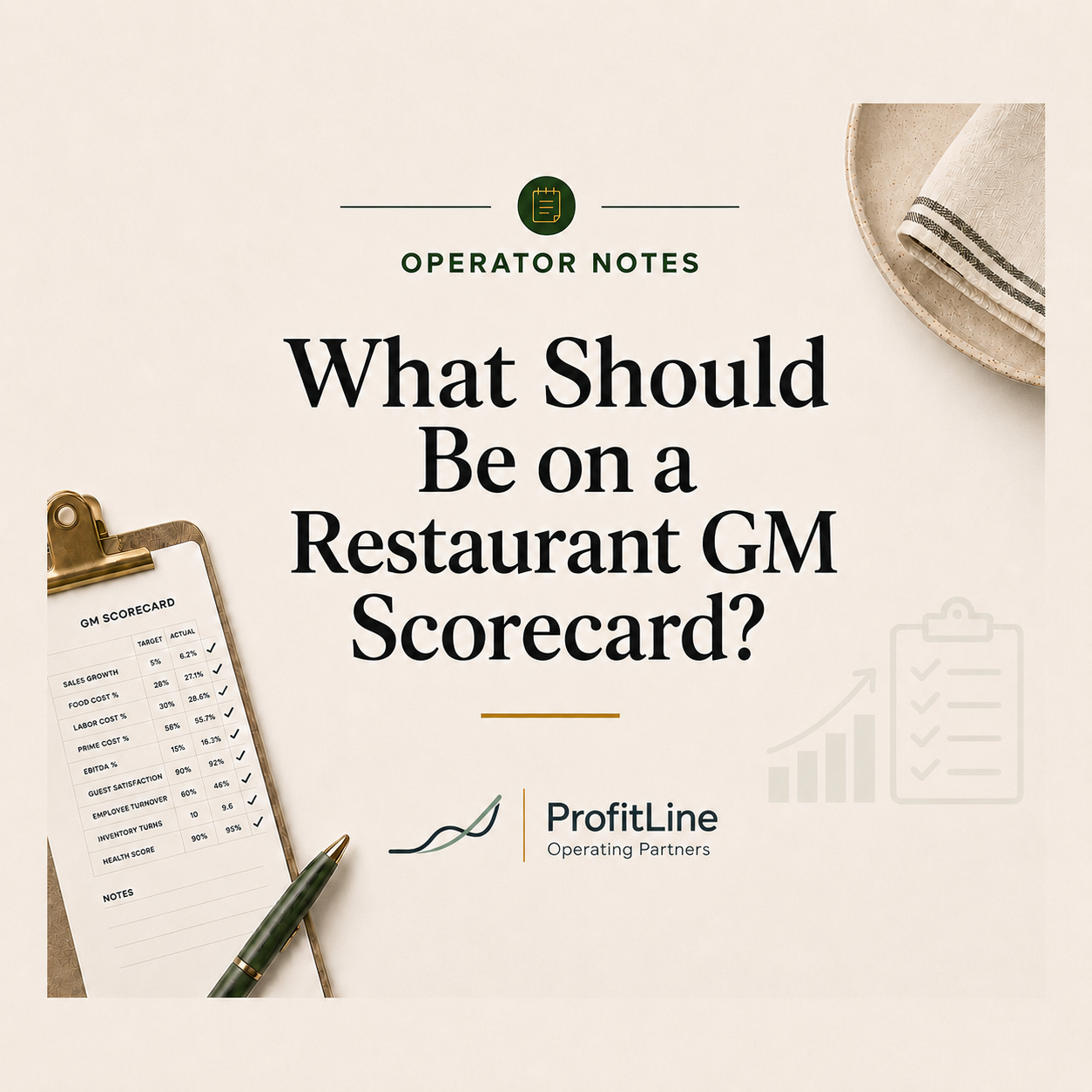
What should be on a Restaurant General Manager scorecard?
A good restaurant GM scorecard should not be complicated.
If it takes a finance degree to understand it, it will not get used. If it has 47 metrics, it becomes wallpaper.
The goal is simple: help the GM understand whether the restaurant is winning, drifting, or in trouble.
The best scorecards focus on the things a GM can actually influence: sales, labor, COGS, prime cost, guest experience, people, standards, and follow-through.
Because the scorecard itself is not the system. The rhythm around the scorecard is.
What to Do Before Opening Your Second Restaurant
Opening your second restaurant is where you find out whether you have a business that can scale or one great location being held together by hustle. This article breaks down what operators should have in place before opening location two, including leadership structure, training systems, labor planning, opening timelines, and the operating rhythm needed to protect both the new restaurant and the original one.
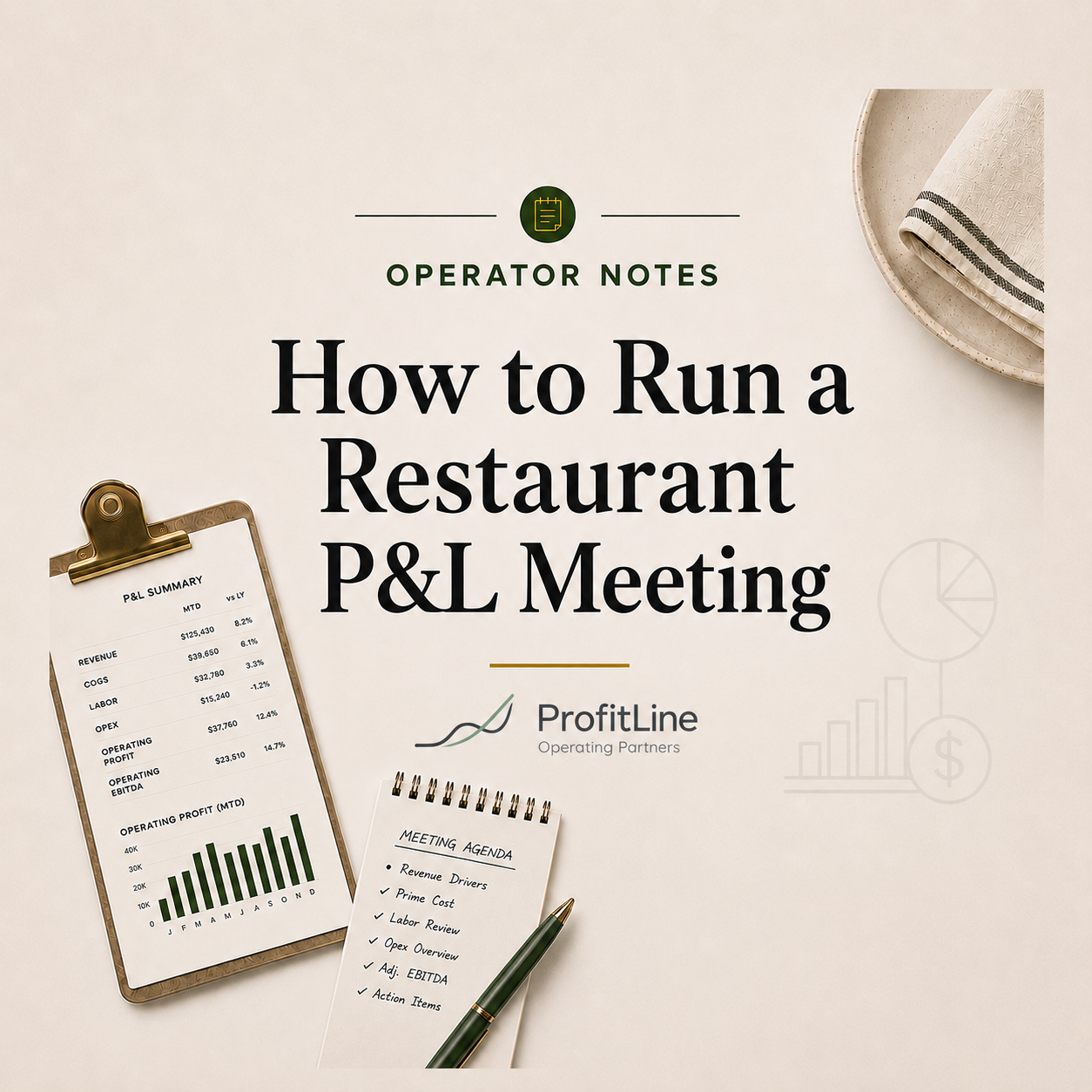
How to Run a Restaurant P&L Meeting
A restaurant P&L meeting should do more than review numbers after the fact. It should help managers understand what happened, why it happened, what they can control, and what needs to change before the next period closes. This article breaks down a simple way to run a better P&L meeting around sales, COGS, labor, prime cost, and clear follow-up actions.
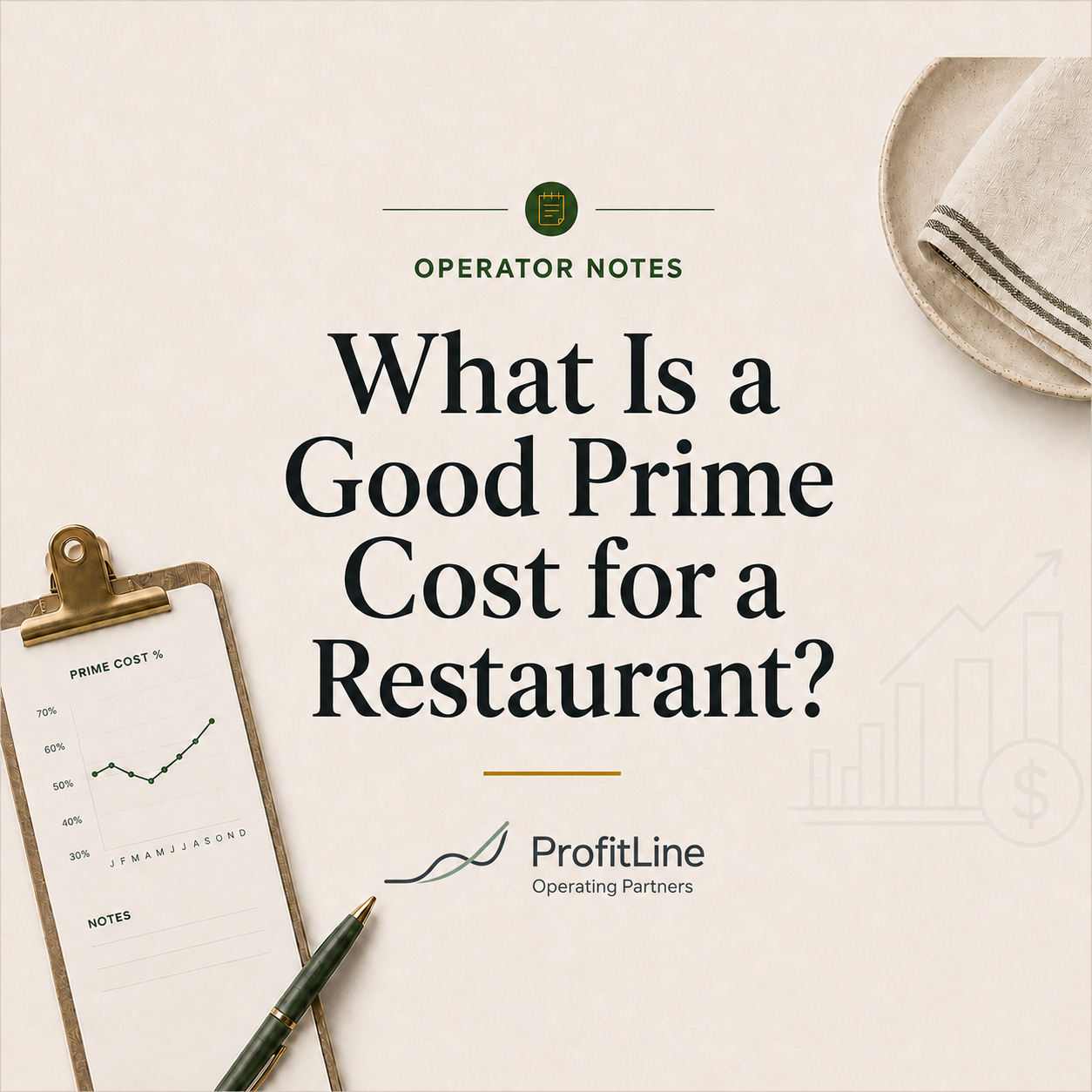
What is a good prime cost for a restaurant?
Prime cost is one of the first numbers I look at when evaluating restaurant performance. It does not tell the whole story, but it tells you where to start looking. This article breaks down what prime cost is, how to calculate it, what range most restaurants should watch, and why the real opportunity is not just cutting costs, but building better operating discipline around labor, COGS, and margin.