
The 10-Minute Walk That Can Save a Restaurant Shift
It took me a long time to realize that a lot of bad shifts give you a warning before they go sideways. The problem is that the manager is usually too busy to see it.
They walk in, answer three questions, check the schedule, get pulled into the kitchen, deal with a callout, and suddenly, the rush is on top of them.
Then the shift starts running them, instead of the other way around.
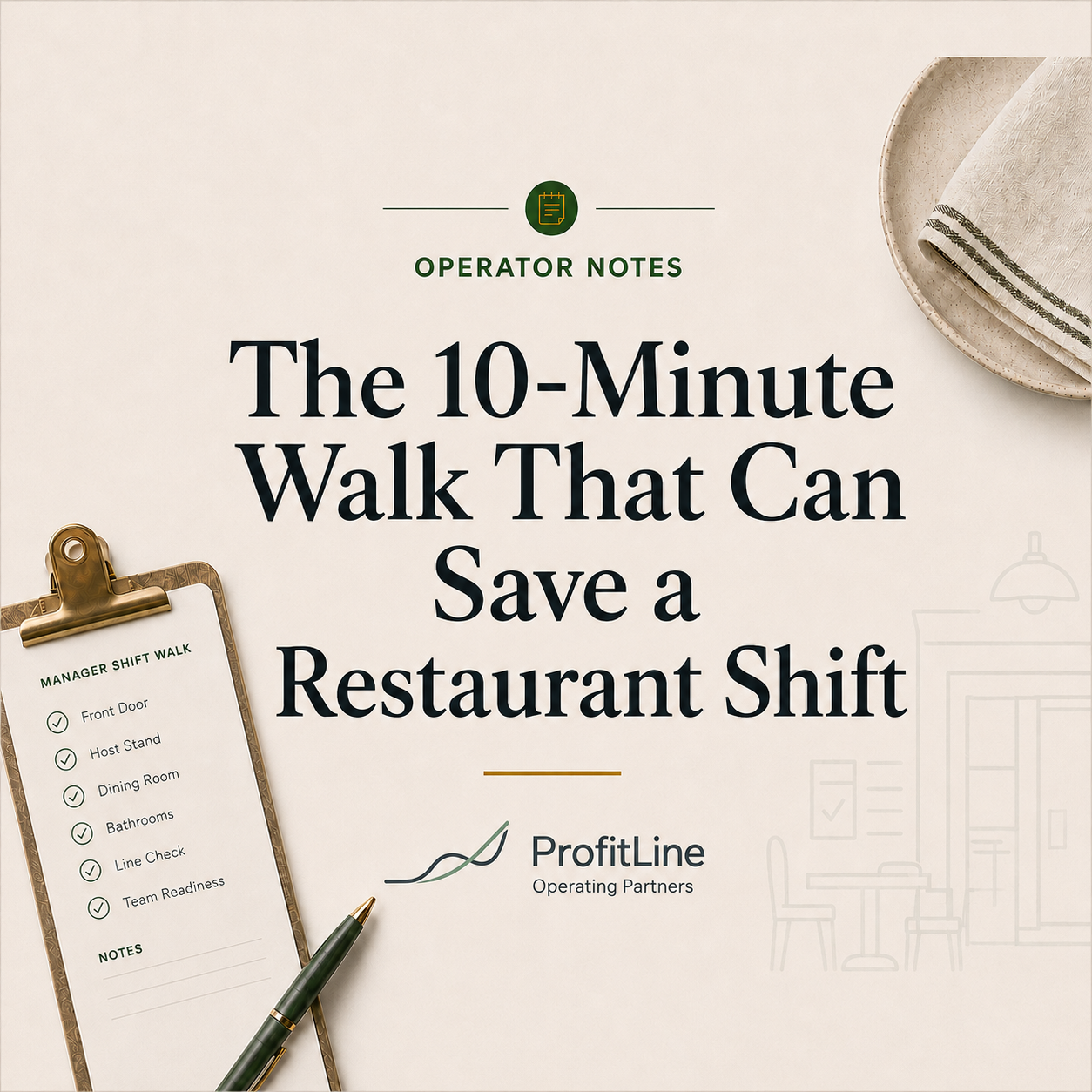
A 10-minute walk before volume will not fix everything, but it can keep a manager from getting surprised by things they should have caught earlier. This is not a clipboard parade. It is a quick lap with a purpose.
Start where the guest starts
Walk in through the front door. Not the back door, not the side door, the front door.
What does the guest see first?
Look at the parking lot, windows, front door, host stand, floors, menus, bathrooms, music, lighting, temperature, and the dining room's first impression.
A dirty bathroom before the rush is not going to magically get better at 7:00. A messy host stand before the rush usually turns into bad first impressions once the door starts swinging.
This part of the walk tells you whether the restaurant looks ready for guests or is just open for business. Those are different things. I always like to be guest-ready, 15 minutes before the doors open.
Check the handoff points
Most shift problems happen at the handoff. I call a ‘handoff’ where work gets passed from one person to another. Host to server, server to bar, server to kitchen, kitchen to expo, expo to runner, manager to guest.
Is the host stand set up?
Are menus ready?
Is the bar stocked for service?
Is expo clean and organized?
Are server stations stocked?
Are to-go supplies ready?
Does the kitchen know about parties, catering, specials, 86’d items, or staffing gaps?
A good manager is not just checking if people are present. They are checking if the shift can flow.
Look at the line before it matters
The worst time to find out the line is not ready is when tickets are already printing.
Before the rush, the manager needs to look at the station setup, backups, labels, portions, utensils, pans, sauces, proteins, sides, and anything that usually causes friction. This is where a good line check is critical. I say a good line check because too often, they’re just ‘pencil whipped’ to check a box for the DM.
Do not just ask, “Are we good?” Everyone says yes. Look, with your eyeballs.
If a station is short, messy, unlabeled, underprepped, or missing tools, that is not a kitchen problem later. That is a shift problem now. Catch it while there is still time to fix it.
Read the people
This may be the most important part.
A restaurant can look ready on paper and still not be ready in the room.
Who looks buried already?
Who’s behind on prep or opening sidework?
Who is moving slowly?
Who seems frustrated?
Who is new and needs a closer eye?
Who is working a station they are not strong on?
Who is the person everyone will look to when things get tight?
Managers need to read the team before the rush, not after the wheels start coming off.
Sometimes, the best thing a manager can do before volume is move one person, reset expectations, or give a quick coaching point before the shift gets loud. This is one of the reasons I like to have my ‘roster-in-pocket’. Player card, roster, crib sheet - whatever you call it. It’s always good to have that handy when you walk in to know if your aces are in their places.
Pick one focus for the shift
The 10-minute walk should end with a clear focus. Not 12 things. One or two.
Maybe tonight is about ticket times.
Maybe it is guest recovery.
Maybe it is side work and closing discipline.
Maybe it is host communication.
Maybe it is food quality through expo.
Maybe it is cutting labor without hurting the close.
A shift with no focus usually becomes whatever the chaos decides. These focuses should be derived from the walk AND coincide with last week’s manager meeting.
The manager should know what matters most before the rush starts, and the team should hear it in plain language.
Final thought
A 10-minute walk will not make a weak shift perfect. But it gives the manager a better chance to lead the shift instead of chasing it.
Walk in like a guest.
Check the handoff points.
Look at the line before tickets start.
Read the people.
Pick the focus.
Then run the shift with your eyes open.
That is not complicated. It is just easy to skip.
And skipping it is usually when the shift starts making decisions for you.
How ProfitLine Operating Partners can help
ProfitLine Operating Partners helps restaurant owners and leadership teams build simple operating routines that managers can actually use during the shift.
That can include manager opening routines, shift walks, pre-shift structure, store visit templates, GM scorecards, training systems, and follow-up rhythms that keep standards from drifting once the restaurant gets busy.
The goal: better shift readiness, stronger manager execution, and fewer problems that should have been caught before the rush.
