
Why Manager Meetings Don’t Fix Execution
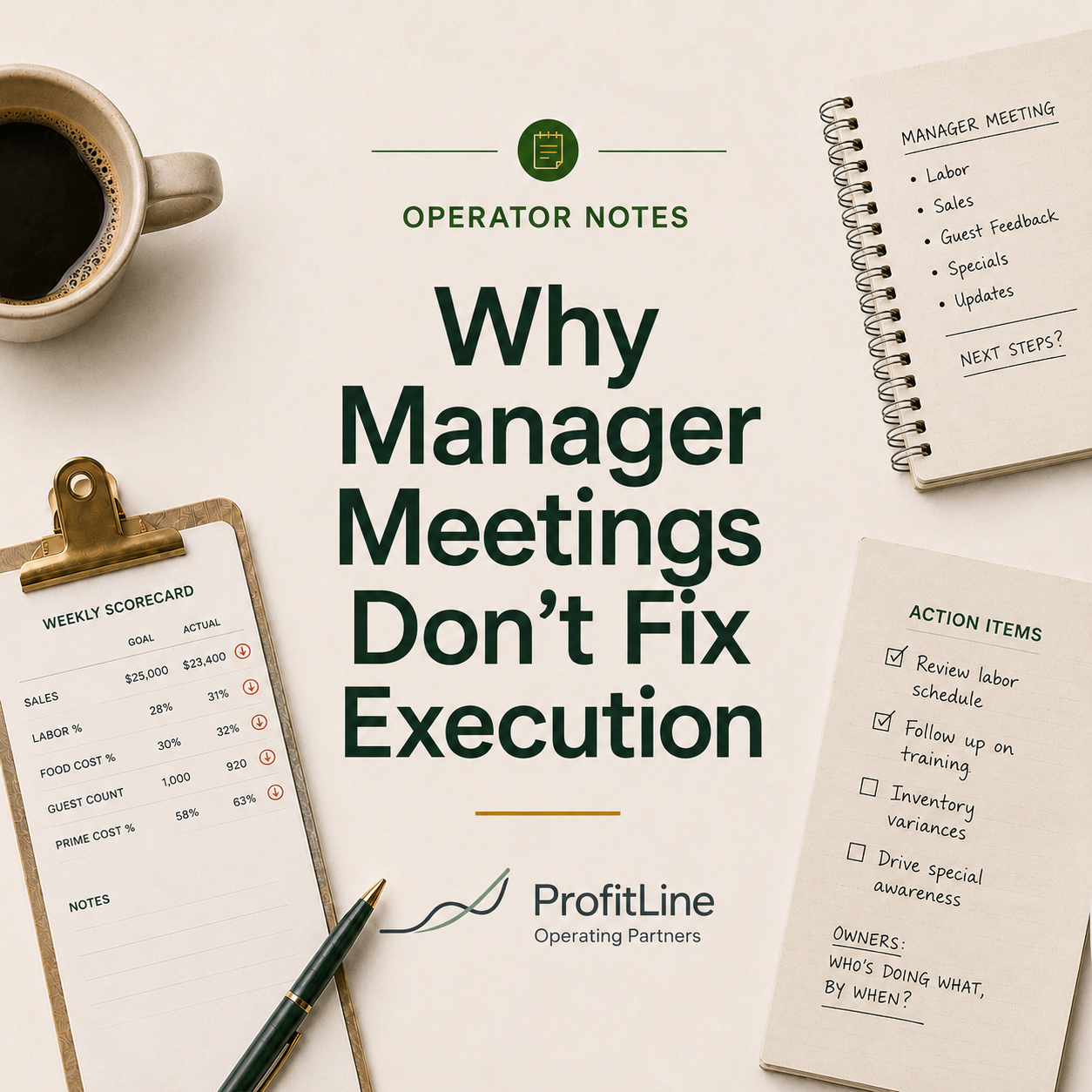
Restaurant manager meetings can make you feel like you’re making progress. Everybody gets in the room. The issues get talked through. Someone brings up labor, someone brings up training, someone brings up the close, and someone mentions the same food quality issue from last week.
Everyone nods. Everyone agrees. Then the week happens, the restaurants get busy, and somehow the same issue ends up right back on the agenda.
The meeting was not useless, but the conversation never turned into ownership.
I’ve noticed a lot of restaurants don’t have a communication problem as much as they have a follow-up problem. They talk about the right things. They usually know what is off. They can name the store, shift, manager, station, or process that needs attention.
What they do not always have is a clear way to ensure something changes after the meeting ends.
Talking about a bad close does not fix the close. Talking about labor does not fix the schedule. Talking about training does not mean anyone actually retrained the station, checked the trainer, or followed up with the new hire.
That is where meetings start becoming a loop. The team keeps re-discussing the same problem because nobody clearly owns the next move.
A better manager meeting does not need to be longer. It needs to be clearer.
If labor is off, what are we actually doing about it this week? Who is reviewing the schedule? Who is coaching the manager? What are we looking for on the next shift? When are we checking back?
If food cost is drifting, what is the suspected driver? Ordering, prep, waste, portioning, inventory, menu mix? Who owns the follow-up? What needs to be inspected before the next meeting?
If training is behind, who is actually responsible for the next step? Is the issue the material, the trainer, the manager follow-up, or the employee not getting enough reps?
Those are the questions that turn a meeting into action. The next shift is where the meeting gets tested.
A manager can agree with everything in the room and still go back to running the restaurant the same way. That does not always mean they do not care. Sometimes the expectation was too vague. Sometimes, they were never coached on what to do differently. Sometimes the follow-up was loose enough that the issue did not feel real. That is why ownership matters.
“We need to get better at closing” is not ownership.
“Sarah is walking the close with the closing managers this week, updating the checklist, and reporting back Friday” is ownership.
That is the difference between a meeting topic and an actual next step.
The goal is not to turn restaurant meetings into corporate theater. Nobody needs more admin for the sake of admin.
The goal is to stop wasting time talking about the same problems with no movement.
Keep the meeting tight. Pick the few things that actually matter. Look at the numbers, talk about the pattern, assign the work, and make sure the follow-up has somewhere to live.
When people know the action items will be reviewed, they take them more seriously. When they know the conversation will disappear by next week, they learn that the meeting is mostly noise.
Manager meetings can help, but they do not fix execution on their own. Execution improves when the meeting creates clarity, the clarity creates ownership, and the ownership gets followed up on during the actual work.
That is where the business changes. Not in the meeting itself, but what happens after.
How ProfitLine Operating Partners can help
ProfitLine Operating Partners helps restaurant owners and leadership teams build operating rhythms that create better follow-through.
That can include leadership meeting structure, GM scorecards, P&L review cadence, accountability trackers, store visit routines, training follow-up, and clearer ownership across the team.
The goal: fewer recycled conversations, better execution, and a team that knows what needs to happen after the meeting ends.
