
Why Your Best hourly Employee Might not Be Ready to Manage Yet
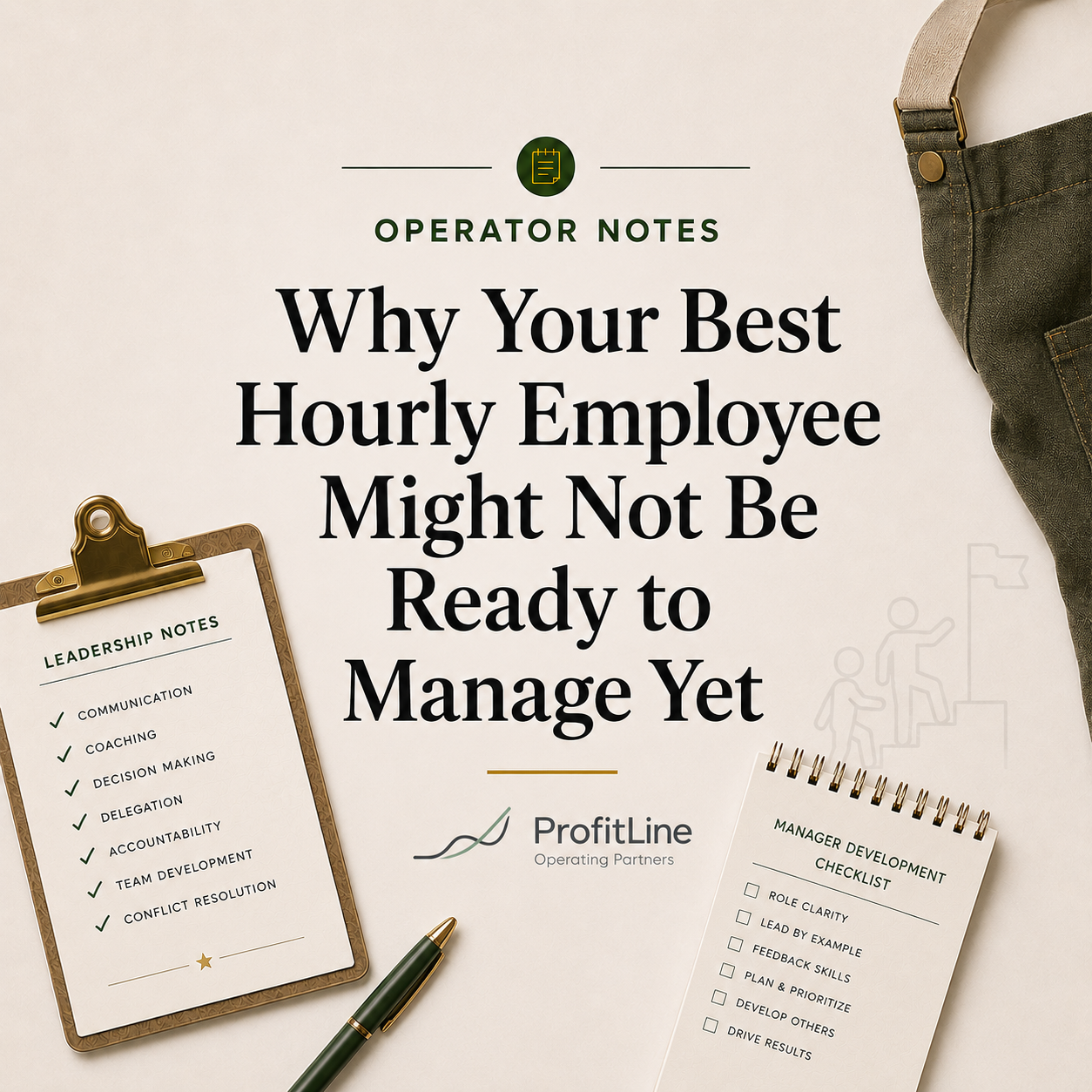
You have a great hourly employee; they show up on time, they care, they know the menu, they know the regulars, they can handle pressure, they pick up shifts, and they are one of the people you trust when the restaurant gets busy.
So when a management spot opens up, they feel like the obvious choice, and sometimes they are. But not always.
Most restaurant operators have made this mistake at some point, myself included.
Being a great hourly employee and being a good restaurant manager are two very different jobs. One is about personal execution. The other is about leading execution through other people.
That gap is where a lot of restaurants get themselves in trouble.
Reliability is not the same as readiness
A reliable hourly employee is valuable. Every restaurant needs more of them.
But reliability by itself does not mean someone is ready to manage.
They may be great at their station. They may know how to open, close, prep, serve, bartend, cook, or handle the rush. They may be someone the team respects because they work hard and do things the right way. That matters.
But management requires a different set of skills.
A manager has to coach people who are not performing. They have to hold standards when the restaurant gets chaotic. They have to make labor decisions. They have to understand food cost, waste, guest issues, ticket times, cleanliness, side work, prep, cash handling, and shift flow.
They have to move from “I know how to do it” to “I know how to get the team to do it consistently.” That is not automatic.
The promotion changes the relationship
This is one of the parts that operators underestimate. When you promote someone from the hourly team into management, their relationship with the team changes overnight.
Yesterday, they were one of the crew. Today, they are expected to correct behavior, enforce standards, cut people from the floor, coach their friends, and make decisions that may not be popular.
That is hard. Especially if nobody prepares them for it. One of the easiest ways I’ve found to help them understand this is a drawing one of my mentors gave me when I was first promoted into management. 2 stick figures separated by a line. He said, “You were on this side of the fence, now you’re on the other side of the fence, and you can’t jump back to the first side of the fence.”
A lot of newly promoted managers struggle because they are trying to stay liked while also being respected.
So they avoid hard conversations. They let small things slide. They do too much themselves instead of directing the team. They become the hardest-working person in the building, but not necessarily the person leading the building or their shift.
That is usually not a character issue.
It is (almost always) a training and support issue.
A strong employee can become a weak manager without the right structure
I have seen this happen plenty of times. An operator promotes a top hourly employee because they have earned trust. The person is excited. The owner is excited. The team is told, “They know the business. They’ll be great.”
Then reality hits. They are closing five nights a week. They are covering callouts. They are trying to write schedules. They are handling upset guests. They are expected to manage labor, but nobody has taught them how to read the numbers or manage labor shift-by-shift, hour-by-hour. They are expected to train people, but nobody has shown them how to train consistently. They are expected to enforce standards, but the standards are mostly tribal knowledge.
A few months later, the operator is frustrated, and the new manager is burned out.
And the restaurant may have lost a great hourly team member without gaining a strong manager. That is a bad trade.
Promote potential, but train the role
This does not mean you should stop promoting from within. You absolutely should develop your people.
Some of the best operators I know started as hourly employees. Cooks, servers, bartenders, hosts, dishwashers, shift leads. That path can build incredible leaders because they understand the work from the ground up.
But internal promotion only works when it comes with structure. Do not just hand someone keys and hope they figure it out.
Before you promote someone, ask:
Can they communicate clearly under pressure? Can they hold standards without making it personal? Can they coach someone who is struggling? Can they make decisions that protect the business, not just the shift? Can they understand the basics of labor, food cost, sales, and guest experience? Can they lead people who used to be their peers? Do they know how to drive sales and a great guest experience within their 4 walls?
If the answer is “not yet,” that does not mean they are not worth developing. It means they need a path, and they need development.
The shift lead step matters
One of the best ways to protect both the restaurant and the employee is to create a real shift lead step. Not a fake title and not a cook/server with keys. Not “you’re basically a manager, but we’re still paying you hourly and giving you no authority.”
A real development step. Let them start owning specific parts of the shift:
Pre-shift communication.
Line checks.
Side work follow-up.
Guest recovery.
Training a new employee.
Running the floor for part of the shift.
Closing checklist completion.
Prep sheet accountability.
Labor awareness during slower periods.
Give them reps before giving them the whole building.
Then coach them on what happened.
What went well?
Where did they avoid a hard conversation?
Where did they jump in and do the work instead of directing the work?
Where did the team respond well?
Where did they need more clarity?
That is how you build a manager. Not by hoping they magically become one once their title changes.
Managers need operating tools, not just expectations
A lot of new managers fail because they are given expectations without tools. They are told to “watch labor,” but they are not shown what labor should look like by shift. They are told to “control food cost,” but they are not connected to waste, prep, ordering, portioning, or inventory habits. They are told to “hold people accountable,” but they lack clear standards, checklists, or coaching language. They are told to “run a great shift,” but nobody has defined what a great shift actually means. That is not leadership development. That is dumping responsibility on someone and hoping they survive.
A new manager needs simple, usable tools:
A clear opening and closing checklist.
A shift readiness checklist.
A labor guide by sales volume.
A prep accountability process.
A training checklist for each role.
A daily manager recap.
A simple scorecard that connects their work to the business.
The goal is not to bury them in paperwork. The goal is to give them enough structure to make good decisions.
Do not confuse loyalty with leadership
This is another hard one that I still experience today with clients. Sometimes, the person who has been with you the longest is not the best person to promote. They may be loyal, they may care, and they may have been there from the beginning.
That deserves appreciation, but leadership requires more than tenure.
A manager has to be able to lead the current version of the business, not just remember the early version of it. As restaurants grow, the job changes.
What worked in one location with the owner always nearby may not work in a second, third, or fourth location. The business needs stronger systems, clearer standards, and better communication.
Promoting someone just because they have “been through it with you” can create problems if they are not ready to lead what comes next. Loyalty matters, but loyalty alone is not a management system.
The operator’s job is to build the bench
If you are constantly forced to promote someone before they are ready, that is usually a bench problem, and bench problems do not get fixed the week a manager quits. They get fixed months earlier. Restaurant operators need to be looking at their team and asking:
Who has influence?
Who stays calm?
Who teaches others naturally?
Who takes pride in the details?
Who handles feedback well?
Who can be trusted with small leadership responsibilities?
Who might be ready in six months with the right coaching?
That is people development. Not waiting for a hole in the schedule and then throwing your best server or line cook into management because you are out of options.
A better promotion process
Before promoting a strong hourly employee into management, slow down and build a path. Start with conversations. Let them know what management actually involves, not just the title and pay bump. Give them small leadership responsibilities and watch how they handle them. Teach them the numbers that matter. Coach them on communication and accountability. Let them shadow strong managers. Give them feedback after real shifts. Make sure they understand that management is not just doing more work. It is getting the team to perform better. That is the difference.
Final thought
Your best hourly employee might become a great manager. But they are not automatically ready just because they are dependable, talented, or loyal.
Promoting from within is one of the best things a restaurant can do. But only when the promotion comes with training, structure, and support.
Otherwise, you risk losing a great employee and creating a struggling manager. The better move is simple:
See the potential.
Build the path.
Train the role.
Then promote the person.
That is how you develop leaders instead of just filling holes.
At ProfitLine Operating Partners, we help restaurant owners and leadership teams build the systems, scorecards, and operating rhythms that turn strong employees into stronger operators.
If your team is growing and you’re trying to build stronger managers, let’s talk through where the business feels stuck.
